
.png)
arnab.jana[at]civil.iitb.ac.in
- Profile
- About me
- Projects
- Research Group
- Publication
- Research in News Media
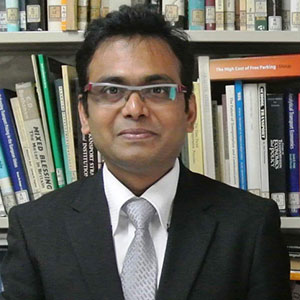
Prof. Arnab Jana
Professor
Construction Technology and Management
arnab.jana[at]civil.iitb.ac.in
+91-22-2576-9331
https://www.civil.iitb.ac.in/faculty/details/prof-arnab-jana
Work Areas :
Infrastructure planning and location-allocation model, Application of ICT in urban and regional planning, Urban policy assessment, Econometric and behavioral modeling
Prof. Arnab Jana
Our Research Area
Our group’s research spans diverse domains of urban planning, integrating technology, health, infrastructure, and socio-economic dimensions to shape equitable and sustainable cities. The body of work can be divided into the following key sectors:
Urban Transport and Accessibility
A strong strand in his work focuses on mobility behavior, pedestrian safety, and regional accessibility. His studies analyze behavioral responses to crossing infrastructure, fleet optimization for extreme conditions like snow, and integration of high-speed rail with conventional systems. He models the spatial effects of transportation infrastructure and emphasizes equitable access. His research bridges psychological, environmental, and infrastructural variables, helping to guide the development of inclusive and efficient transportation networks.
Housing and Informality
Urban informality, affordable housing, and slum rehabilitation are prominent features of his research. He explores the socio-spatial dynamics of appliance usage, thermal discomfort, and energy behavior in informal and resettlement contexts. These studies enable better housing design and inform policy on infrastructure upgrades and energy provision for marginalized communities. His participatory research approach emphasizes community engagement and trust-building, crucial for urban transformation in low-income settlements.
Urban Informatics and Perception Studies
Pioneering the application of AI, ML, and sensor technologies in urban planning, Dr. Jana’s research in urban informatics is both cutting-edge and human-centered. He applies deep learning to classify land use, uses drones and satellite imagery for mapping urban growth, and combines sound and image data to assess urban perceptions. His audio-visual models help quantify experiential aspects of urban life—such as safety, comfort, and vibrancy—making subjective urban experience a measurable planning parameter.
Policy Modeling and Governance
Many of his papers go beyond empirical insights to propose policy frameworks, as seen in his work on winter road maintenance, electricity access, and disaster preparedness. His research has real-world applications in decision-support systems, governance reform, and participatory planning. He emphasizes not only the efficiency of infrastructure systems but also their adaptability and inclusiveness—ensuring resilient planning for future urban challenges.
Urban Health and the Built Environment
Dr. Jana has consistently addressed how housing and public infrastructure impact health outcomes, especially in vulnerable populations. His studies on indoor air quality, thermal comfort, and occupant behavior in low-income housing offer practical insights for designing healthier homes. He explores the interrelationship between housing conditions and diseases such as tuberculosis and examines emergency health services, notably through a detailed analysis of Maharashtra’s 108 ambulance services. His research informs healthcare planning through spatial analytics and system optimization, enabling policymakers to strengthen urban health systems.
Education
Ph.D, Department of Urban Engineering, The University of Tokyo, Japan
PG Certificate in Environmental Leadership, Asian Program for Incubation of Environmental Leadership (APIEL), The University of Tokyo, Japan
MCP, Indian Institute of Technology (IIT) Kharagpur, India
B.Arch, Indian Institute of Engineering Science and Technology (IIEST) Shibpur. India
Experience
- April 2026 - to date, Professor, Indian Institute of Technology Bombay
- May 2021 – April 2026, Associate Professor, Indian Institute of Technology Bombay
- November 2013 – May 2021, Assistant Professor, Indian Institute of Technology Bombay
- April 2016 – June 2016, Visiting Faculty, Hiroshima University, Japan
- May 2007 – March 2010, JLL India
Awards
- Departmental Award (CUSE) for Excellence in Teaching, IIT Bombay, 2021
- Young Faculty Award, IIT Bombay, 2013
- Japanese Government Monbukagakusho (MEXT) Scholarship-2010-2013,
- GCOE Research supports funds for young researchers, Ministry of Education, Culture, Sports, Science and Technology (MEXT), Government of Japan FY 2011-2012 and FY 2012-2013
- Institute Silver Medal, IIT Kharagpur, 2007
Teaching
Courses
- CE 235 Artificial Intelligence & Data Science (2025)
- CE 6104 Quantitative Methods in Planning (2025 - 2026)
- CE 6102 Introduction to Buildings: Functional Design and Science (2025)
- CE 6001 Fundamentals of Urban Science and Engineering (2024 - 2025)
- CE 899 Communications Skills (2024, 2025)
- US 603 Research Methods in Urban Science
- US 602 Fundamentals of Urban Science & Engineering (2014 - 2023)
- US 605 Introduction to Building: Functional Design and Science (2017, 2022, 2025)
- US 899 Communications Skills (2022 - 2023)
- PS 619 Health Policy: An Introduction (2018 - 2021)
Studios/Labs
- US 611 Urban Design and Engineering Laboratory
- US 612 Urban Design and Engineering Studio
Administrative Roles
1. Member, Institutional Review Board (IRB) - IIT Bombay (2023 - Till Date)
2. Member, PwD Student Cell - IIT Bombay (2022 - Dec 2025)
Editorial Roles
Editorial Board Member, Sustainable Transport and Livability
Editorial Board Member, Discover Cities, (Springer Nature)
Editorial Board Member, Journal of the Eastern Asia Society for Transportation Studies, Published by Eastern Asia Society for Transportation Studies
Prof. Arnab Jana
Ongoing Projects:
1. Walking across borders: Exploring challenges to walkability in the Global South.
Funded by Volvo Education and Research Foundations
In collaboration with:
Prof. Joseph Ferreira
Dept of Urban Studies and Planning, Massachusetts Institute of Technology, Cambridge, USA.
Prof. Roberto Ponce-Lopez
Center for the Future of Cities, TEC de Monterrey, Mexico
2. Maharashtra Drone Mission
As Co-PI (together with several faculty members from IIT Bombay)
Funded by the Government of Maharashtra
3. Developing & Designing a Prototype for an Assistive Exercising Device for Fall Prevention of the Elderly & Persons with Disabilities
As Co-PI (PI: Prof. Swati Pal)
Funded by Coal India Limited
4. Unleashing the potential of real-time, very high-resolution carbon emissions data for 100+ cities in India.
CHETNA (City-wise High-resolution carbon Emissions Tracking and Nationwide Analysis)
As Co-PI
Funded by Grantham Foundation (In collaboration with Université de Versailles Saint Quen en Yvelines (UVSQ), France)
5. PUSHPAK - National Mission on Drone Technology - Towards Drone Excellence.
As Co-PI (together with several faculty members from IIT Bombay and other institutes)
Funded by the Ministry of Electronics and Information Technology, GoI.
6. GIS-based Maps - Geospatial Initiatives for Experiential Learning for Youth.
As Co-PI (together with several faculty members from IIT Bombay)
Funded by the Ministry of Youth Affairs and Sports, GoI.
COMPLETED PROJECTS
| Sr. No. | From | To | Project Title | Agency Name | Role | Current Status |
| 1 | October 2014 | Mar-21 | Centre for Excellence in Urban Science and Engineering – Frontier areas of Science and Technology (FAST)Scheme | Ministry of Education, Government of India | Co-PI | Completed |
| 2 | Nov 2017 | Dec-20 | Network Science for Urban Engineering | Department of Science and Technology, Government of India (In collaboration with University of Porto, Portugal) | Co-PI | Completed |
| 3 | April 2018 | Mar-21 | Healthcare Informatics System: An integrated toolkit for healthcare data analysis. | Department of Science and Technology, Government of India | PI | Completed |
| 4 | Nov 2020 | Nov-21 | State Action Plan on Climate Change (SAPCC) For Rajasthan | Government of Rajasthan | Co-PI | Completed |
| 5 | March 2021 | Jun-23 | What is in a Meter? | British Academy, UK (In Collaboration with Teesside Univ, UK) | PI | Completed |
| 6 | 2020 | 2023 | Health and Nutrition | UNICEF | Co-PI | Completed |
| 7 | September 2022 | Feb-24 | Modeling energy behavior in educational buildings using IoT and sensing technology | TIH Foundation for IoT and IoE | Co-PI | Completed |
| 8 | October 2023 | Dec-25 | Unleashing the potential of real-time very high-resolution carbon emissions data for 100+ cities in India. | Gotham Institute (In collaboration with Université de Versailles saint Quen en Yvelines (UVSQ), France | Co-PI | Ongoing |
| 9 | September 2023 | Sep-24 | Analyzing the Maharashtra Emergency Medical Response (108) | BVG India Ltd. | PI | Completed |
Prof. Arnab Jana
Current PhD students
| Name | Role | Co-Supervisor | Major Research Area |
| Vidhulekha Tiwari (CE) | Supervisor | Prof. Santanu Bandyopadhyay (DESE) | Modeling Activity Time Use and Household Energy Consumption |
| Vallary Gupta (CE) | Supervisor | Prof. Chirag Deb | Investigating Design Factors and Appliance Usage for Enhancing Building Energy Efficiency |
| Vipul Parmar (CE) | Supervisor | Multi-sensory human perception of the urban environment | |
| Merin Chako (CE) | Supervisor | Prof. Santanu Bandyopadhyay (DESE) | Energy transition and the role of energy poverty: Experience from India |
| Bishal Goswami (IDC School of Design) | Co-Supervisor |
Prof. Venkatesh Rajamanickam (IDC School of Design), Dr Ilya Fridman (MADA, Monash University), & Dr Xavier |
Democratising neighbourhood mapping through design and creative collaboration of local communities |
PhD Supervision (Completed)
|
Name |
Year of Graduation |
Other supervisors, if any |
Thesis topic |
|
|
1 |
Varun Varghese |
2018 |
– |
Activity Opportunities and Travel Behavior: Impact of ICT in Developing Nations, A case of Mumbai India |
|
2 |
Divya Subramanian |
2019 |
– |
Evaluating Recreational Open Spaces: A Multisectoral approach for the Indian context |
|
3 |
Shyan Kirat Rai (Co-Supervisor) |
2020 |
Prof. Krithi Ramamritham |
Government to Government (G2G) model and its acceptance for volunteer allocation during the post-disaster scenario: Case of Kathmandu, Nepal |
|
4 |
Naveen K Alla |
2020 |
– |
Improving Primary Healthcare Access in Low-income Neighbourhoods in Urban Areas: A Case of Mumbai, India |
|
5 |
Deepank Verma (Co-Supervisor) |
2020 |
Prof. Krithi Ramamritham |
Human Perception of Urban Surroundings: A Multimodal Approach using Visual and Auditory Senses |
|
6 |
Vaibhav Kumar (Co-Supervisor) |
2020 |
Prof. Krithi Ramamritham |
Reducing Fire Susceptibility in Resource-Constrained Urban Societies: An Improved Planning Strategy and Its Application for Mumbai |
|
7 |
Sushibala Nambram Devi |
2022 |
Prof. K Narayanan |
Barriers to Decarbonize Urban Redevelopment in Mumbai: Empirical Evidence and Policy Implications |
|
8 |
Khushboo Balani (Co-Supervisor) |
2023 |
Prof. Sarthak Gaurav |
Essays on healthcare financing in India |
|
9 |
Neenu Thomas |
2024 |
Prof. Santanu Bandyopadhyay |
Optimizing Modal Split through Integrating People’s Aspiration |
|
10 |
Karmarkar Omkar Deepak |
2025 |
Prof. Nagendra R Velaga |
Modeling Transit-Triggered Volumetric Urban Growth around New Transit Stations |
|
11 |
Trupti Patil (ADCPS) |
2026 |
Prof. Sarthak Gourav (SJMSOM) |
Drivers of Cardiovascular Diseases in India: Determining Risk Factor and Policy Choices |
|
12 |
Nikita Pandey (ADCPS) |
2026 |
- |
India’s Turn to Publicly Funded Health Insurance: A Policy Cycle Analysis of Ayushman Bharat-PMJAY |
Mtech Students
Current:
|
No. |
Name |
Research Title |
|
1 |
Yashvi Unadkat |
Optimising IEQ in Educational Buildings Using Digital Twin |
|
2 |
Amrutanshu Prusty |
Health Impact Assessment in Low-Income Housing |
|
3 |
Mayank Soni |
CFD-Based Evaluation of Void Ventilation for Enhancing Indoor Air Quality and Thermal Comfort |
|
4 |
Ritin Penha |
Evaluating Building Envelope Retrofits Using Parametric Energy Simulations: A Climate-Wide Study for India |
Completed:
- 2025 IDDDP Apoorv Jayswal "Emission Reduction in Transportation Systems" (Co-guided by Prof. Santanu Banyopadhyay)
- 2025 Mtech Soumyadeep Haldar "Quantitative Assessment of Medium-Resolution Satellite Data for Urban Feature Extraction: A Comparative Analysis of Landsat and Sentinel-2 in Mumbai" (Co-guided by Prof. Harish Phuleria)
- 2025 Mtech Varun Rajesh Phadke "Spatial Modelling of Indian Cities by parameterising building codes" (Co-guided by Prof. Harish Phuleria)
- 2025 Mtech Simran Choudhury "Assessing Last-Mile Connectivity in Mumbai: Evaluating the Impact of Introducing Micro-Mobility"
- 2024 Mtech Kanishk Joshi "Urban Sprawl Analysis Using Satellite Imagery for Indore City" (Co-guided by Prof. Eswar Rajasekharan)
- 2024 Mtech Jasim Qamar "Perceptions and Patterns of Heat Vulnerability: A Study of Urban Delhi Using the Heat Vulnerability Index and Resident Surveys"
- 2024 Mtech Sankhadeep Jana "Availability and Accessibility of Public Open Space in Mumbai" (Co guided by Prof. H Burte (ADCPS))
- 2023 Mtech Bhavana Chekkala “Air Quality and Ventilation in Indian Residential Kitchens” (Co guided by Prof. Virendra Sethi (ESED))
- 2022 MPP Anuj Kumar “Understanding the issues in low refilling of LPG connections under PM Ujjwala Yojana“
- 2022 M.Tech: Ebrahim Saria “Time Use in Employment and Commute Activities in Maharashtra, India: Urban-Rural Similarities and Differences”
- 2022 M.Tech: Abhishek Kochure “Analyzing Liveability in Slums and Slum Rehabilitation Housing: Case of Mumbai“
- 2022 DDeg: Naman Sureka “A Study to Reduce Carbon Footprint in the City of Kolkata”
- 2021 M.Tech: Krithika Panicker “Analyzing the Impact of Building Design Modifications on Daylighting Performance: Study of Low-Income Apartments of New Delhi, India."
- 2021 M.Tech: Megha Kabra “Analyzing the residential self-selection behavior in Jaipur: Exploring the parameters and their interrelationships.“
- 2020 M.Tech: Chirag Vadher “Is Electric Vehicles a Sustainable Solution to the Indian Transport System? A case study from Mumbai, India.”
- 2018 D.Deg: Madhur Maheshwari “Passenger Transport Sector Planning with Constrained Carbon Emissions”
- 2018 M.Tech: Sohel Rana “Identification of Barriers Towards Implementation of Green Building Project”
- 2017 M.Phil: Piyush Kumar “Re-visiting the Idea of Smart and Sustainable City: A Comparative Evaluation of the 20 Declared Smart Cities”
- 2016 M.Tech: Punamiya Karan Harish “Empowering Citizens to Monitor Urban Spaces”
Prof. Arnab Jana
De Sarkar, K., Sarkar, A., Phuleria, H., Jana, A., Zhou, C., & Ciais, P. (2026). Regional variations in key drivers of residential energy consumption (REC): Insights from India’s metro cities, Energy and Buildings, https://doi.org/10.1016/j.enbuild.2026.117519. Najar, N. A., Najar, A. H., Najar, I. A., Jana, A., & Parthasarathy, D. (2026). Barriers to Winter Road Maintenance Policy Implementation and Coping Strategies Adopted by the Street-Level Bureaucrats: Evidence from Kashmir, India. Transportation Research Record, https://doi.org/10.1177/03611981251405251. Patil, T., Jana, A., & Gaurav, S. (2025). Determinants of Functional Disability in India: The Interplay of Health Conditions, Environmental and Personal Factors. Journal of Population Ageing, 1-17. https://doi.org/10.1007/s12062-025-09498-5 Najar, N. A., Parthasarathy, D., & Jana, A. (2025). From shovels to snowploughs: the evolution of snow clearance infrastructure in Kashmir, India. International Journal of Critical Infrastructures, 21(3), 209-227. https://doi.org/10.1504/IJCIS.2025.146871 Gupta, V., Sarkar, A., Deb, C., & Jana, A. (2025). Energy inefficiency in energy-poor households in Mumbai, India. Energy and Buildings, 116519. https://doi.org/10.1016/j.enbuild.2025.116519 Najar, NadeeM Akbar, Imran Nowsheri, Arnab Jana, and D. Parthasarathy. "Techno-Economic Analysis of Electrically Heated Pavement for Snow Clearance at Sub-zero Temperatures." INDIAN HIGHWAYS (2025). Sarkar, A., Jana, A. Exploring the limits of energy use in urban poor communities. Nat Cities 2, 117–119 (2025). https://doi.org/10.1038/s44284-024-00196-5 Patil, T., Jana, A. & Gaurav, S. Unravelling sex-and-gender-specific risk factors of hypertension in India: insights from NFHS 5 (2019–21). Discover Public Health 22, 55 (2025). https://doi.org/10.1186/s12982-025-00444-6 Saxena, A., Sarkar, A., & Jana, A. (2025). Examining multi-tasking behaviour and ICT utilization during commutes in public transport: the role of personality traits, socio-economic factors, and travel characteristics. Transportation Planning and Technology, 1–26. https://doi.org/10.1080/03081060.2025.2457026 Parmar, V., & Jana, A. (2024). A review of tools and techniques for audio-visual assessment of urbanscape. Discover Cities, 1(1), 29. https://doi.org/10.1007/s44327-024-00036-0 Sarkar, A., Parmar, V., Jana, A., & Saunik, S. (2024). Analyzing the Maharashtra Ambulance Service “108”: The Prospect and Challenges. Health Systems & Reform, 10(2). https://doi.org/10.1080/23288604.2024.2380251 Najar, N. A., Jana, A., & Parthasarathy, D. (2024). Addressing Climatic Uncertainty through Fleet Optimization for Robust Winter Road Maintenance Policy Design. Journal of Policy Modeling. https://doi.org/10.1016/j.jpolmod.2024.12.001 Gupta, V., Sarkar, A., Saxena, A., Jana, A., & Bandyopadhyay, S. (2024). Appliance utility in low-income housing: On the relation between socio-economic characteristics, thermal comfort and appliance usage pattern. Energy and Buildings, 114849. https://doi.org/10.1016/j.enbuild.2024.114849 Najar, N. A., Jana, A., & Parthasarathy, D. (2024). Investigating Feasibility of Fleet Augmentation for Mechanized Snow Clearance of Roads: Economic Analysis and Policy Improvements. Transportation in Developing Economies, 10(2), 31. https://doi.org/10.1007/s40890-024-00217-x GS, K. P., Pillai, G., Agu, N., Jana, A., Bandyopadhyay, S., Sarkar, A., ... & Divers, A. (2024). Assessing the Smartness Required of Electricity Metres for Affordable, Inclusive, and Sustainable Electricity Access in the Global South. Process Integration and Optimization for Sustainability, 1-15. https://doi.org/10.1007/s41660-024-00442-2 Karmarkar, O.D., Jana, A. & Velaga, N.R. Modelling volumetric growth of emerging urban areas around new transit stations. npj Urban Sustain4, 34 (2024). https://doi.org/10.1038/s42949-024-00171-y Saxena, A., Sarkar, A. & Jana, A. Analysing the impact of socio-economic variables, travel characteristics, and psychological factors on the selection of crossing facilities under time pressure. Infrastruct. Solut.9, 90 (2024). https://doi.org/10.1007/s41062-024-01400-0 Omkar Deepak Karmarkar, Arnab Jana & Nagendra R. Velaga (2024) Regional accessibility impacts of integrating high-speed railway and conventional rail: spatial analysis of the Mumbai Ahmedabad region, India, Area Development and Policy, DOI: 1080/23792949.2024.2312268 Jana, A., Sarkar, A., Parmar, V., & Saunik, S. (2023). Examining district-level disparity and determinants of timeliness of emergency medical services in Maharashtra, India. Scientific reports, 13(1), 21239. https://doi.org/10.1038/s41598-023-48713-1 Sarkar, A., & Jana, A. (2023). Interpreting the energy choices and environmental satisfaction determinants in low-income housing typologies: Cases from slums and slum rehabilitation housing of Mumbai, India. Cities, 143, 104576. https://doi.org/10.1016/j.cities.2023.104576 Verma, A., Gupta, V., Nihar, K., Jana, A., Jain, R. K., & Deb, C. (2023). Tropical climates and the interplay between IEQ and energy consumption in buildings: A review. Building and Environment, 110551. https://doi.org/10.1016/j.buildenv.2023.110551 Subramanian, D., Bandyopadhyay, S. & Jana, A. (2023). Amenities or vegetation? Comparing cost implications of developing open spaces in emerging nations. Environ Dev Sustain(2023). https://doi.org/10.1007/s10668-023-03404-9 Karmarkar, O. D., Jana, A., & Velaga, N. R. (2023). Willingness to pay for reduced travel time: Case study of Mumbai-Ahmedabad High Speed Railway. Case Studies on Transport Policy, 12, 100974. https://doi.org/10.1016/j.cstp.2023.100974 Balani, K., Gaurav, S., & Jana, A. (2023). Spending to grow or growing to spend? Relationship between public health expenditure and income of Indian states. SSM-Population Health, 21, 101310. https://doi.org/10.1016/j.ssmph.2022.101310 Waller, G., Crosbie, T., Newbury-Birch, D., Bandyopadhyay, S., Ghanem, D. A., Jana, A., ... & Divers, A. (2022). What is in a Meter? A Qualitative Exploration into the Implementation of Electricity Metering Across Mumbai Communities Using Normalisation Process Theory. Global Implementation Research and Applications, 2(4), 361-370. https://doi.org/10.1007/s43477-022-00059-y Varghese, V., Chikaraishi, M., & Jana, A. (2022). Joint analysis of mode and travel-based multitasking choices in Mumbai, India. Travel Behaviour and Society, 27, 148-161. https://doi.org/10.1016/j.tbs.2022.01.006 Jana, A., Sarkar, A., & Bardhan, R. (2022). Evaluating well-being in low-income mass housing in India with specific reference to natural ventilation. Area Development and Policy, 1-26. https://doi.org/10.1080/23792949.2022.2043171 Kabra, M., & Jana, A. (2022). Analyzing the scope of public transportation in commute to workplace: Study of travel behavior in Jaipur city. Journal of the Eastern Asia Society for Transportation Studies, 14, 865-880. https://doi.org/10.11175/easts.14.865 Thomas, N., Jana, A., & Bandyopadhyay, S. (2022). Effect of Policies and COVID-19 Cases on Mobility and Activity Participation during 300 Days of COVID-19: Panel Data Analysis of Asian Countries. Journal of the Eastern Asia Society for Transportation Studies, 14, 16-35. https://doi.org/10.11175/easts.14.16 Pattisapu, D., Ravikanti, S., Bagree, N., Manlik, R., Chordia, S., Thomas, N., ... & Jana, A. (2022). Analysing the Perception towards Electric Vehicles in India: Variation among different Classes of Cities. Journal of the Eastern Asia Society for Transportation Studies, 14, 264-283. https://doi.org/10.11175/easts.14.264 Thomas, N., Jana ,A., & Bandyopadhyay, S. (2022). Physical distancing on public transport in Mumbai, India: Policy and planning implications for unlock and post-pandemic period. Transport Policy, 116, 217-236. https://doi.org/10.1016/j.tranpol.2021.12.001 Varghese, V., Chikaraishi, M., & Jana, A. (2021). The architecture of complexity in the relationships between information and communication technologies and travel: A review of empirical studies. Transportation Research Interdisciplinary Perspectives, 11, 100432. https://doi.org/10.1016/j.trip.2021.100432 Mehrotra, S., Subramanian, D., Bardhan, R., & Jana (2021), A. Effect of surface treatment and built form on thermal profile of open spaces: A case of Mumbai, India. Urban Climate, 35, 100736. https://doi.org/10.1016/j.uclim.2020.100736. Verma, D., Jana, A., & Ramamritham, K. (2020). Predicting human perception of the urban environment in a spatiotemporal urban setting using locally acquired street view images and audio clips. Building and Environment, 186, 107340. https://doi.org/10.1016/j.buildenv.2020.107340 Jana, A., Sarkar, A., & Bardhan, R. (2020). Analysing outdoor airflow and pollution as a parameter to assess the compatibility of mass-scale low-cost residential development. Land Use Policy, 99, 105052. https://doi.org/10.1016/j.landusepol.2020.105052 Kumar, V., Bandyopadhyay, S., Ramamritham, K., & Jana, A. (2020). Pinch analysis to reduce fire susceptibility by redeveloping urban built forms. Clean Technologies and Environmental Policy22, no. 7, pp: 1531-1546. https://doi.org/10.1007/s10098-020-01895-y Kumar, V., Bandhyopadhyay, S., Ramamritham, K., & Jana, A. (2020). Optimizing the Redevelopment Cost of Urban Areas to Minimize the Fire Susceptibility of Heterogeneous Urban Settings in Developing Nations: a Case from Mumbai, India. Process Integration and Optimization for Sustainability, 4(4), 361-378. https://doi.org/10.1007/s41660-020-00124-9 Kumar, V., Ramamritham, K., & Jana, A. (2020). Simulating fire-safe cities using a machine learning-based algorithm for the complex urban forms of developing nations: a case of Mumbai India, Geocarto International, DOI: 1080/10106049.2020.1756463 Rai, S. K., Ramamritham, K., & Jana, A. (2020). Identifying factors affecting the acceptance of Government to Government (G2G) system in developing nations – Empirical evidence from Nepal. Transforming Government: People, Process and Policy. Vol. 14 No. 2, pp. 283-303 (IF: 2.6) DOI 10.1108/TG-05-2019-0035 Rai, S. K., Ramamritham, K., & Jana, A. (2021). Government to Government (G2G) framework to strengthen communication among government agencies during disasters– Learnings from 2015, Gorkha Earthquake, Nepal. J. of Electronic Governance. 13 (1), 73-96 Jana, A., Sarkar, A., Thomas, N., Krishna Priya, G. S., Bandyopadhyay, S., Crosbie, T., ... & Newbury-Birch, D. (2021). Rethinking water policy in India with the scope of metering towards sustainable water future. Clean Technologies and Environmental Policy, 23(8), 2471-2495. Pardeshi, P., Jadhav, B., Singh, R., Kapoor, N., Bardhan, R., Jana, R., David, S., & Roy, N. (2020). Association between architectural parameters and burden of tuberculosis in three resettlement colonies of M-East Ward, Mumbai, India. Cities & Health. https://doi.org/10.1080/23748834.2020.1731919 Kumar, V., Ramamritham, K., & Jana, A. (2020). A decision framework to access urban fire vulnerability in cities of developing nations: empirical evidence from Mumbai. Geocarto International. https://doi.org/10.1080/10106049.2020.1723718 Thomas, N., Bandhyopadhyay, S. & Jana, A. (2019). Investigating the association of individual and neighborhood characteristics with travel time: Empirical evidences from Mumbai, India. Journal of the Eastern Asia Society for Transportation Studies. https://doi.org/10.11175/easts.13.238 Verma, D., Jana, A. & Ramamritham, K. (2019). Classification and mapping of sound sources in local urban streets through AudioSet data and Bayesian optimized Neural Networks. Noise Mapping. https://doi.org/10.1515/noise-2019-0005 Verma, D., Jana, A. & Ramamritham, K. (2019). Machine-based understanding of manually collected visual and auditory datasets for urban perception studies. Landscape and Urban Planning, https://doi.org/10.1016/j.landurbplan.2019.103604 Jana, A., Basu, R., & Mukherjee, C. (2019). A game theoretic approach to optimize multi-stakeholder utilities for land acquisition negotiations with informality. Socio-Economic Planning Sciences, https://doi.org/10.1016/j.seps.2019.06.002 Subramanian, D., & Jana, A. (2019). Evaluating the cultural ecosystem services of India: Comparison of budget allocations to improve the use value of recreational open spaces. Ecosystem Services, Vol. 38, https://doi.org/10.1016/j.ecoser.2019.100960 Verma, D., Jana, A. & Ramamritham, K. (2019). Transfer learning approach to map urban slums using high and medium resolution satellite imagery, Habitat International, https://doi.org/10.1016/j.habitatint.2019.04.008 Varghese, V., & Jana, A. (2019). Multitasking during travel in Mumbai, India: Effect of satiation in heterogeneous urban settings. Journal of Urban Planning and Development, American Society of Civil Engineers, Vol 125(2), https://doi.org/10.1061/(ASCE)UP.1943-5444.0000504 Bardhan, R., Debnath, R., Jana, A. (2019). Evolution of sustainable energy policies in India since 1947: A review. WIREs Energy and Environment, https://doi.org/10.1002/wene.340 Biswas, R., Jana, A., Arya, K., Ramamritham, K. (2019). A good-governance framework for urban management. Journal of Urban Management, https://doi.org/10.1016/j.jum.2018.12.009 Subramanian, D., & Jana, A. (2018). Assessing urban recreational open spaces for the elderly: A case of three Indian cities. Urban Forestry & Urban Greening, Volume 35, pages 115-128, https://doi.org/10.1016/j.ufug.2018.08.015 Subramanian, D., Bandopadhyay, S., & Jana, A. (2018). Optimization of financial expenditure to improve urban recreational open spaces using Pinch analysis: A case of three Indian cities. Process Integration and Optimization for Sustainability. https://doi.org/10.1007/s41660-018-0071-0 Subramanian, D., & Jana, A. (2018). Design Dichotomy: Impact of Design Intervention on the Recreational Open Spaces of Urban India—A Photo Essay. Berkeley Planning Journal, 30(1). https://escholarship.org/uc/item/48z1r71c Verma, D; Jana, A; Ramamritham, K. (2018). Quantifying Urban Surroundings Using Deep Learning Techniques: A New Proposal. Urban Science. Volume 2, no. 3: 78, https://doi.org/10.3390/urbansci2030078 Verma, D., Jana, A., & Ramamritham, K. (2018). Classification Of The Structure Of Cities Through Mid-Resolution Satellite Imagery And Patch Based Neural Networks. International Archives of the Photogrammetry, Remote Sensing & Spatial Information Sciences (pp. 713-717). ISPRS. https://doi.org/10.5194/isprs-archives-XLII-5-713-2018 Varghese V. and Jana A. (2018). Interrelationships between ICT, social disadvantage, and activity participation behaviour: A case of Mumbai, India. Transportation Research Part A: Policy and Practice. https://doi.org/10.1016/j.tra.2018.06.009 Varghese V. and Jana A. (2018). Impact of ICT on multitasking during travel and the value of travel time savings: Empirical evidences from Mumbai, India. Travel Behaviour and Society, Volume 12, Pages 11-22, https://doi.org/10.1016/j.tbs.2018.03.003 Bardhan, R., Debnath, R., Jana, A., Norford, Leslie K. (2018). Investigating the association of healthcare-seeking behavior with the freshness of indoor spaces in low-income tenement housing in Mumbai, Habitat International, Volume 71, Pages 156-168, ISSN 0197-3975, https://doi.org/10.1016/j.habitatint.2017.12.007 Varghese V., Jana A., & Sarkar S. (2017). Analysing Disparities and their Impact on Time Use Behavior: Evidences from Mumbai, India. Journal of the Eastern Asia Society for Transportation Studies. https://doi.org/10.11175/easts.12.35 Jana, A., and Varghese, V. (2017). Analyzing mode choice for inter-regional travel in India. Transportation Research Procedia, Volume 25, 2017, Pages 5220-5234, https://doi.org/10.1016/j.trpro.2018.02.049 Chikaraishi, M., Jana, A., Bardhan, R., Varghese, V., & Fujiwara. A. (2017). A framework to analyze capability and travel in formal and informal urban settings: A case from Mumbai. Journal of Transport Geography, Volume 65, Pages 101–110. https://doi.org/10.1016/j.jtrangeo.2017.09.001 Basu, R., Jana, A., Bardhan, R., & Bandyopadhyay, S. (2017). Pinch Analysis as a Quantitative Decision Framework for Determining Gaps in Health Care Delivery Systems. Process Integration and Optimization for Sustainability. http://doi.org/10.1007/s41660-017-0015-0 Jana, A., & Sarkar, S. (2017). Disparate housing strategies and practices of public and private enterprises in India: Analysis of middle class housing and new towns; Cities. https://doi.org/10.1016/j.cities.2017.09.010 Basu, M., Ghosh, S., Jana, A., Bandyopadhyay, S., & Singh, R. (2017). Resource Mapping During a Natural Disaster: A Case Study on the 2015 Nepal Earthquake. International Journal of Disaster Risk Reduction. https://doi.org/10.1016/j.ijdrr.2017.05.020 Jana, A., & Basu, R. (2017). Examining the changing health care seeking behaviour in the era of health sector reforms in India: evidences from the National Sample Surveys 2004 & 2014. Global Health Research and Policy, 2(1), 6. https://doi.org/10.1186/s41256-017-0026-y Basu, M., Ghosh, S., Jana, A., Bandyopadhyay, S., & Singh, R. (2017). Medical Requirements during a Natural Disaster: A Case Study on WhatsApp Chats among Medical Personnel during the 2015 Nepal Earthquake. Disaster Medicine and Public Health Preparedness, 1-4. https://doi.org/10.1017/dmp.2017.8 Basu, R., Aggarwal, R., & Jana, A. (2017). An Integrated Framework for Allocation of New Emergency Response Facilities in Developing Nations. Process Integration and Optimization for Sustainability, 1-14. https://doi.org/10.1007/s41660-017-0009-y Basu, R., Varghese, V., & Jana, A. (2017). Comparison of Traditional and Emerging Paratransit Services in Indian Metropolises with Dissimilar Service Delivery Structures. Asian Transport Studies, 4(3). http://doi.org/10.11175/eastsats.4.518 Basu, R., Jana, A., and Bardhan, R. (2016). A health care facility allocation model for expanding cities in developing nations: Strategizing urban health policy implementation. Applied Spatial Analysis and Policy. https://doi.org/10.1007/s12061-016-9208-0 Jana, A., Bardhan, R., Sarkar, S., and Kumar, V. (2016). Framework to assess and locate affordable and accessible housing for developing nations: empirical evidences from Mumbai. Habitat International. https://doi.org/10.1016/j.habitatint.2016.07.005 Chikaraishi, M., Jana, A., Bardhan, R., and Fujiwara, A. (2016). Time Use of Urban Poor and Rural Poor on Activity and Travel in Gujarat, India: Similarities and Differences. Asian Transport Studies. https://doi.org/10.11175/eastsats.4.19 Jana, A., and Harata, N. (2016). Provisioning health care infrastructure in communities: Empirical evidences from West Bengal, India. Socio-Economic Planning Sciences. https://doi.org/10.1016/j.seps.2016.02.003 Chakraborty, A., Wilson, B., Saraf, S., and Jana, A. (2015). Open data for informal settlements: Toward a user's guide for urban managers and planners. Journal of Urban Management. https://doi.org/10.1016/j.jum.2015.12.001 Bardhan, R., Varghese, V., and Jana, A. (2015). Analyzing Regional Travel Patterns in India: Disaggregated Analysis of Social, Health and Pilgrimage Trips. Journal of the Eastern Asia Society for Transportation Studies. https://doi.org/10.11175/easts.11.362 Bardhan, R., Sarkar, S., Jana, A., and Velaga, N. (2015). Mumbai slums since independence: Evaluating the policy outcomes. Habitat International.https://doi.org/10.1016/j.habitatint.2015.07.009 Jana, A., Ohmori, N., Takami, K., and Harata, N., (2014). Exploring the role of social interactions and supports in overcoming accessibility barriers while undertaking health tours in India, Social Work in Public Health, Volume – 29, Issue – 4, pp 350-367.https://doi.org/10.1080/19371918.2013.825895 Gupta, V., Anand, A., Jana, A., & Deb, C. (2025, August). Urban form and energy demand-Impact of height and density height and density for low-energy design in Tropical climate. In Building Simulation 2025 (Vol. 19, pp. 0-0). IBPSA. https://doi.org/10.26868/25222708.2025.1445 Gupta, V., Sarkar, A., & Jana, A. (2025, August). Understanding appliance adoption: the role of socio-economic factors in low-income households in developing nations. In Building Simulation 2025 (Vol. 19, pp. 0-0). IBPSA. https://doi.org/10.26868/25222708.2025.1443 Sarkar, A., Gupta, V., & Jana, A. (2025, August). Investigating the built-environment and behavioural prerequisites for occupant satisfaction within the low-income settlements of Mumbai, India. In Building Simulation 2025 (Vol. 19, pp. 0-0). IBPSA. https://doi.org/10.26868/25222708.2025.1461 Parmar, V., Sarkar, A., & Jana, A. (2025, August). Impact of window views on occupant’s well-being and readiness to pay in residential buildings: A case from Mumbai Metropolitan Region, India. In Building Simulation 2025 (Vol. 19, pp. 0-0). IBPSA. https://doi.org/10.26868/25222708.2025.1577 Sharma, A., Zhou, C., Ciais, P., Sarkar, A., Jana, A., & Phuleria, H. (2025, April). CHETNA-Power Sector: High-Resolution Mapping of Power Sector Emissions in Indian Cities: Bridging Data Gaps for Effective GHG Mitigation and Urban Energy Planning. In EGU General Assembly Conference Abstracts (pp. EGU25-15602). 10.5194/egusphere-egu25-15602 De Sarkar, K., Sarkar, A., Zhou, C., Ciais, P., Phuleria, H., & Jana, A. (2025, April). CHETNA-Residential Sector: High-Resolution GHG Emissions Analysis for Indian Cities using Building-Level Climate-Energy Modeling. In EGU General Assembly Conference Abstracts (pp. EGU25-15001). 10.5194/egusphere-egu25-15001 Zhou, C., Ciais, P., Jana, A., Sarkar, A., Mittakola, R. T., Tibrewal, K., ... & Phuleria, H. (2025, April). CHETNA-Overview: City-wise High-resolution Carbon Emissions Tracking and Nationwide Analysis. In EGU General Assembly Conference Abstracts (pp. EGU25-13577). 10.5194/egusphere-egu25-13577 Goswami, B., Ho, X., Fridman, I., Rajamanickam, V., & Jana, A. (2025, January). Exploring Democratic Participation and Consensus Building in a Small-Scale Participatory Mapping Study. In International Conference on Research into Design (pp. 371-383). Singapore: Springer Nature Singapore. https://doi.org/10.1007/978-981-96-6414-6_31 Tiwari, V., Jana, A., Bandyopadhyay, S. (2024). Choice of Cooking and Lighting Energy Sources in Households: Empirical Evidence from Urban India. In Proceedings of Energise 2023- Lifestyle, Energy Efficiency, and Climate Action, pp 253–260, Alliance for an Energy Efficient Economy. https://doi.org/10.62576/FVNJ6197 Karmarkar, O. D., Jana, A., & Velaga, N. R. (2025). High Speed Railway and its Urban Growth Implications: Public Perception about Factors Inducing Urban Development. Transportation Research Procedia, 82, 1418-1435. https://doi.org/10.1016/j.trpro.2024.12.133 (WCTR 2023, Montreal, Canada.) Gupta, V., Sarkar, A., and Jana, A. (2023), Multi-objective optimization of envelope retrofits for improved energy performance in an educational building, 9th International Conference on Advances in Energy Research (ICAER), 2023, IIT Bombay, Mumbai, 12-14th December 2023. Gupta, V., Deb, C., & Jana ,A. (2023), The effect of Climate and Urban Form on Building Energy Performance. In the 6th International Conference on Countermeasures to Urban Heat Islands (IC2UHI 2023), Melbourne, Australia. Karmarkar, O. D., Jana, A., & Velaga, N. R. (2023), Changing the Space-Time Geography of Mumbai: Accessibility Impacts of Future High-Speed Rail Corridor and Metro Lines, TRB 2023, (TRBAM-23-05167) Sarkar, A., Jana, A. (2022). From Slum to Slum Rehabilitation: Comparing the Factors Affecting Energy Consumption and Environmental Satisfaction Among the Low-Income Housing in Mumbai. In: Doolla, S., Rather, Z.H., Ramadesigan, V. (eds) Advances in Clean Energy and Sustainability. ICAER 2022. Green Energy and Technology. Springer, Singapore. https://doi.org/10.1007/978-981-99-2279-6_4 Thomas, N., Bandyopadhyay, S., & Jana, A. Evaluating the Activity-Based Transport Emission through Transport Modal Split Optimization Model based on Travel Behavior, 10th Asian Symposium on Process Systems Engineering: Systems Engineering for the Digitalization Era, 10-14 Dec 2022, PSE Asia 2022 Joshi, K., Jana, A., Arjunan, P., & Ramamritham, K. (2022, November). XENIA: eXplainable ENergy informatics and attributes for building energy benchmarking. In Proceedings of the 9th ACM International Conference on Systems for Energy-Efficient Buildings, Cities, and Transportation (pp. 406-412). https://doi.org/10.1145/3563357.3566140 (Online) Thomas, N., Jana, A. and Bandyopadhyay, S. (2022) Transport Modal Split Optimization Model based on Travel Behavior: Impact of Activity-Specific Policies on Transport Energy and Emission, 6th Sustainable Process Integration Laboratory (SPIL) Scientific Conference. Brno, Czech Republic. (Hybrid) Omkar Deepak Karmarkar, Arnab Jana, Nagendra R. Velaga, Competing with Future High Speed Railway in India: Pricing Policies and Operations Strategies for Conventional Railway. Fifth International Conference on Railway Technology: Research, Development and Maintenance 2022, 22 – 25 August 2022, Le Corum, Montpellier, France (Link) Sarkar, A. Jana, A. & Kubota, T., Impacts of COVID-19 pandemic on lifestyle and energy consumption in slums and slum rehabilitation housing of Mumbai, India?Part 1. Environmental satisfaction before the pandemic, Annual Meeting 2021, AIJ, Tokai, Japan, 7-10 Sep. (Link) Jana, A. Sarkar, A. & Kubota, T., Impacts of COVID-19 Pandemic on Lifestyle and Energy Consumption in Slums and Slum Rehabilitation Housing of Mumbai, India?Part2. Situation during the pandemic, Annual Meeting 2021, AIJ, Tokai, Japan, 7-10 Sep. (Link) V. Kumar, A. Sarkar and A. Jana, Big Data and WebGIS for Formulating Health Care Policy in India, 2021 IEEE Conference on Norbert Wiener in the 21st Century (21CW), 2021, pp. 1-6, doi: 10.1109/21CW48944.2021.9532567. Barpete, K., Jana, A. (2021). Evaluation of Hedonic Price Models that Explain Transit Induced Impact on Housing Prices. In: Jana, A., Banerji, P. (eds) Urban Science and Engineering. Lecture Notes in Civil Engineering, vol 121. Springer, Singapore. https://doi.org/10.1007/978-981-33-4114-2_12 K. P. G. S., G. Pillai, A. Jana, S. Bandyopadhyay, T. Crosbie and D. A. Ghanem, "An Analytic Hierarchy Process (AHP) Framework for Feature Evaluation of Smart Electricity Meters in India," 2021 56th International Universities Power Engineering Conference (UPEC), 2021, pp. 1-5, doi: 10.1109/UPEC50034.2021.9548151. Karmarkar, O. D., Jana, A., & Velaga, N. R. (2021). Willingness to Pay for Proposed High Speed Railway in India: Are Conventional Train Travellers Ready to Pay Higher for Saved Travel Times and How Much?. Transportation Research Board 100th Annual Meeting, Washington DC, United States. 2021-1-5 to 2021-1-29 Kumar, N., Gupta, M., Jana, A. (2021). ICT and Its Use in Solid Waste Collection Systems for Route Optimization. In: Jana, A., Banerji, P. (eds) Urban Science and Engineering. Lecture Notes in Civil Engineering, vol 121. Springer, Singapore. https://doi.org/10.1007/978-981-33-4114-2_5 Nambram, S., Narayanan, K., Jana, A. (2021). The Trade-Off Between the Economic and Environmental Impact of Conventional and Green Building Materials. In: Jana, A., Banerji, P. (eds) Urban Science and Engineering. Lecture Notes in Civil Engineering, vol 121. Springer, Singapore. https://doi.org/10.1007/978-981-33-4114-2_28 Sarkar, A., Kumar, N., Jana, A., Bardhan, R. (2021). Association Between Built-Environment and Livability: Case of Mumbai Slum Rehabs. In: Jana, A., Banerji, P. (eds) Urban Science and Engineering. Lecture Notes in Civil Engineering, vol 121. Springer, Singapore. https://doi.org/10.1007/978-981-33-4114-2_6 Singh, V.K., Kumar, V., Jana, A. (2021). Spatial Distribution of Socioeconomic Factors and Its Impact on Urban Land Use Dynamics: An Agent Based Modeling Approach . In: Jana, A., Banerji, P. (eds) Urban Science and Engineering. Lecture Notes in Civil Engineering, vol 121. Springer, Singapore. https://doi.org/10.1007/978-981-33-4114-2_3 Thomas, N., Jana, A., Bandyopadhyay, S. (2021). Do Socioeconomic Characteristics Affect Travel Time and Transport Perception? Insights from Mumbai, India. In: Jana, A., Banerji, P. (eds) Urban Science and Engineering. Lecture Notes in Civil Engineering, vol 121. Springer, Singapore. https://doi.org/10.1007/978-981-33-4114-2_14 Verma, D., Jana, A. (2021). Urban Envelope: Representing Audio and Visual Features Extracted from Deep Learning Techniques. In: Jana, A., Banerji, P. (eds) Urban Science and Engineering. Lecture Notes in Civil Engineering, vol 121. Springer, Singapore. https://doi.org/10.1007/978-981-33-4114-2_18 Balani, K., Gaurav, S., & Jana, A. (2020). Spending to Grow or Growing to Spend? Evidence on the Relationship between Public Health Expenditure and GDP of Indian States. Winter School 2020, Organized by Department of Economics, Delhi School of Economics University of Delhi and Centre for Development Economics jointly with The Econometric Society, December 14 -17, 2020. New Delhi India (Virtual Mode) Kumar, V., Sarkar, A., & Jana, A. (2020). Twitter and Print Media Data in Formulating Rural Health Care Policy In India. 2nd International Conference on Rural Technology Development and Delivery (RTDD) 2020, IIT Madras, 12-14 March 2020. Shah, P., Varghese, V., Jana, A., & Mathew, T. (2020). Analysing the ride sharing behaviour in ICT based cab services: A case of Mumbai, India. Transportation Research Procedia, 48, 233-246. https://doi.org/10.1016/j.trpro.2020.08.018 Maheshwari, M., Jana, A., & Bandyopadhyay, S. (2020). Optimizing the Modal Split to Reduce Carbon Dioxide Emission for Resource-Constrained Societies. Transportation Research Procedia, 48, 2063-2073. https://doi.org/10.1016/j.trpro.2020.08.266 Kumar, V., Ramamritham, K., & Jana, A. (2020). Effective handling of emergencies in resource constrained urban areas by considering dynamics: a performance analysis. Transportation Research Procedia, 48, 345-362. https://doi.org/10.1016/j.trpro.2020.08.030 Nambram S., Jana A., Narayanan K. (2020) Analysis of Energy Saving and Emission Reduction Potential Through the Energy Efficient Building Design of a Residential Building in a Warm Humid Climate. In: Singh S., Ramadesigan V. (eds) Advances in Energy Research, Vol. 1. Springer Proceedings in Energy. Springer, Singapore. https://doi.org/10.1007/978-981-15-2666-4_58 (Best Poster Award) Mehrotra, S., Subramanian, D., Bardhan, R., & Jana, A. Linkages between built form and open spaces and its impact on thermal comfort: A case of Mumbai, India. 5th International Conference on Countermeasures to Urban Heat Islands (IC2UHI), Hyderabad, India, December 02-04, 2019. (ebook of abstract) Jana, A., Sarkar, A., Kumar, S. & Jagannath, K. V. Autonomous Vehicle as a future mode of transport in India: Analyzing the perception, opportunities and hurdles. 13th International Conference of the Eastern Asia Society for Transportation Studies (EASTS) 2019, Colombo, Srilanka, September 9-12, 2019 (Full paper) Varghese V., Chikaraishi, M. & Jana, A. Mode Choice and Travel-Based Multitasking: Analysis of Self-Selection and Unobserved Heterogeneity among Travellers in Mumbai, India. International Choice Modelling Conference 2019, Kobe, Japan, August 19-21, 2019. (Abstract) D. Verma, A. Jana and K. Ramamritham, "Identifying degrees of built arrangement in Indian cities through mid-resolution satellite imagery and Convolutional Neural Networks," 2019 International Conference on Intelligent Computing and Remote Sensing (ICICRS), 2019, pp. 1-6, doi: 10.1109/ICICRS46726.2019.9555871. Varghese V., & Jana A. Is ICT improving access to activities? A case study of Mumbai, India. 15th World Conference on Transportation Research 2019, Mumbai, India. May 26-31, 2019. Subramanian, D., & Jana, A. Gender disparity in urban Indian playgrounds: Assessing safety, accessibility, and participation of women. Active Living Research Conference, Charleston, USA. February 17-20, 2019. Subramanian, D., & Jana, A. Evaluating accessibility of urban recreational open spaces for persons with movement disabilities: A case of three Indian cities. Active Living Research Conference, Charleston, USA. February 17-20, 2019. Thomas, N., Varghese, V., and A. Jana. Two-Wheeler Vehicle Ownership, Transport Disadvantage, and Mode Choice: A Case Study of Different Behavioral Segments from Mumbai, India. Transportation Research Board 98th Annual Meeting (19-03037), Washington DC, USA. January 2019 Verma, D., Jana, A., & Ramamritham, K. (2019). Artificial Intelligence and Human Senses for the Evaluation of Urban Surroundings. International Conference on Intelligent Human Systems Integration (pp. 852-857). Springer, https://doi.org/10.1007/978-3-030-11051-2_130 Kirat Rai, S., Ramamritham, K., & Jana, A. (2019). Strengthening the Governance through Government to Government (G2G) framework to better communicate among government agencies for effective Disaster Risk Management in Nepal. 4th World Congress on Disaster Management, IIT Bombay, Mumbai. Kumar, V., Kirat Rai, S., Ramamritham, K., & Jana, A. (2019). Demonstrating the role of ICT during fire events, a case of Mumbai-Towards building smart and sustainable cities. 4th World Congress on Disaster Management, IIT Bombay, Mumbai. Subramanian, D., Krishnan, S., & Jana, A. (2019). Towards a framework to use public open spaces for disaster resilience and post disaster recovery in the South-Asian context. 4th World Congress on Disaster Management, Mumbai. Kumar, V., Ramamritham, K., & Jana, A. (2019). Resource Allocation Towards Emergency Response Services Considering Dynamism of Urban Fabrics: Fire Fighting in Mumbai", ICTDX, India. ACM. 10.1145/3287098.3287099 Davy, J., Gomes, J.O., Volosiuk, A., Jana, A., Ray, G., Ganguli, A. K., Zhang, W., Todd, A., (2019) The BRICSplus Network: A Historical Overview and Future Perspectives of the Network’s Role in Human Factors and Ergonomics. In: Bagnara S., Tartaglia R., Albolino S., Alexander T., Fujita Y. (eds) Proceedings of the 20th Congress of the International Ergonomics Association (IEA 2018). IEA 2018. Advances in Intelligent Systems and Computing, vol 821. Springer, https://doi.org/10.1007/978-3-319-96080-7_78 Barpete, K., & Jana, A. (2018). Where we choose to live and why? A review of accessibility factors influencing residential choices. Urban Transitions. Sitges, Spain. Barpete, K., & Jana, A., (2018), Where we choose to live and why? A case study of accessibility factors influencing residential choices. 12th World Congress of the RSAI, 29 May– 1 June 2018, Goa, India Subramanian, D., & Jana, A. (2018). Evaluating recreational open spaces of India: A case of restructuring budget allocations for better performing public amenities. UNDP 3rd Global Biodiversity Finance Conference Chennai, India March 2018. Subramanian, D., & Jana, A. (2018). Assessing accessibility, usability, activity profile and age appropriateness of urban Indian parks: Comparative analysis of three Indian cities. 12th World Congress of the RSAI, Goa, India, March 2018. Subramanian, D., & Jana, A. (2018). Co-Production of recreation: Improving cultural ecosystem services in the Urban Indian context. Ecosystem Services Partnership Asia International Conference, Dehradun, India October 2018. Verma, D; Jana, A; Ramamritham, K. (2018). How diverse are the neighbourhoods? A diversity index to assess land use mix through open source and online datasets. 12th World Congress of the RSAI, 29 May– 1 June 2018, Goa, India Alla, N.K. and Jana, A. (2018). Spatial decision support system for optimal location of primary health care facilities in urban areas. 12th World Congress of the RSAI, 29 May– 1 June 2018, Goa, India Basu, R., Khatua, A., Jana, A., & Ghosh, S. (2017). Harnessing Twitter Data for Analyzing Public Reactions to Transportation Policies: Evidences from the Odd-Even Policy in Delhi, India. 12th International Conference of Eastern Asia Society For Transportation Studies, Ho Chi Minh City, Vietnam Varghese V., & Jana A. (2017). Travel Time Use in Mumbai: Analyzing the Impact of ICT, 4th Conference of Transportation Research Group of India, Mumbai, India, December 16–19, 2017 (Best Paper Award) Varghese, V. Jana, A., "Activity Participation and Time Use Behavior in Mumbai: Impact of Information and Communication Technologies in a Disparate World." Transportation Research Board 96th Annual Meeting, 2017, Washington DC, USA. Alla, N.K. and Jana, A. (2017). Integrated approach for measurement of spatial accessibility of healthcare services in urban areas. The 38 Asian Conference on Remote Sensing. October 23-27, New Delhi. Chikaraishi, M., Jana, A., Bardhan, R., Varghese, V., and Fujiwara, A. (2016). Revisiting Travel Time in Mumbai: Value of Time Saving or Value of Access? Transportation Research Board 95th Annual Meeting Compendium of Papers, Washington, D.C, USA. Sangoi, S., Jain, A., Jana, A., Bardhan, R., and Velaga, N. (2016). Behavior of Housing Prices Within the “Equi-influence” Zone of Metro Corridor in Mumbai, India: Fuzzy Logic Approach. Transportation Research Board 95th Annual Meeting Compendium of Papers, Washington, D.C, USA. Varghese, V., Sarkar, S., Bardhan, R., Velaga, N., and Jana, A. (2015). Transport network characteristics and real-estate undercurrents: The effect of spatial non stationarity on property pricing in Mumbai. 3rd Conference of Transportation Research Group of India (3rd CTRG), 2015, Kolkata, India. Kothari, A., & Jana, A., (2015). Affordable private diagnostic enterprises in India: Effect on preventive healthcare and management of non?communicable diseases. 14th World Congress on Public Health, Kolkata, India Jana, A. (2015). Trip by purpose and availability of the preferred opportunity within districts of India: Analysing Indian elderly travel pattern. 14th International Conference on Mobility and Transport for Elderly and Disabled Persons, TRANSED 2015, Lisbon, Portugal. Jana, A., Bardhan, R., and Sarkar, S. (2015). Future Place making in Mumbai: Analyzing Mumbai Development Plan 2034. Future of Places International Conference – UN Habitat, Stockholm, Sweden. Chikaraishi, M., Jana, A., Bardhan, R., and Fujiwara, A. (2015). Urban-Rural Comparison of Time Use in India: Gender, Education, and Economic Affluence. Transportation Research Board 94th Annual Meeting, Washington, D.C, USA. Jana, A., Khanal, R., and Akinaga, N., 2013, “Designing CSR Program for corporates focusing on Environment & Sustainability”, International Symposium fostering future leaders for sustainable society, Tokyo, January 2013 Jana, A., Ohmori, N., and Harata, N., 2012, “Choice Based on Accessibility & Social Determinants-A Case of Elderly Healthcare Decision and Health Trips in India”, 13th International Conference on ’Mobility and Transport for Elderly and Disabled Persons, TRANSED 2012, New Delhi, India, September 2012. (Full Paper) Jana, A., H, Yuki., An, K., Hamasaki, H., 2012, “Capacity Development for Sustainable Water Management in Rural Area in Cambodia”, International Water Science Conference, IWSC 2012, Bangkok, Thailand, September 2012. Jana, A., Ohmori, N., Takami, K., and Harata, N., 2012, “Evaluation of accessibility to Primary Health Centers in rural areas of developing countries – Case study: West Bengal, India”, Proceedings of the 10th Conference of Asian City Planning, pp.79-86 Jana, A. and Datta, R.N., 2011, “Traffic Management and Operation Improvement Plan for the Influence area of the Howrah Station, India”, 11th International Congress of the Asian Planning School Association, APSA 2011, Tokyo, September 2011 Jana, A., Ohmori, N., and Harata, N., 2011, “Health seeking travel behavior and health care facility choice owing to different service providers”, 2nd ISAJ symposium 2011, Tokyo, October 2011 Bardhan, R. Jana, A., 2010, “Incorporating The Concept of Zero Energy In The Newly Developed Satellite Towns of India – Case Study Rajarhat, Kolkata, India”, India-Japan Symposium On Emerging Technologies, Tokyo; Japan, 7 October, 2010 Chattopadhyay, S. Bardhan, R. Jana, A., 2006, “Growth Dynamics Vs Sustainability – The Dichotomy of twin mining towns Joda & Barbil” XXXIV IAHS, World Congress on Housing Sustainable Housing Design Emphasizing Urban Housing, Naples, Italy, September 20-23, 2006 Newsletters Sarkar, A., Kochure, A., & Jana, A. (2022). Covid-19, Containment, Policy Initiatives and Urban Restart: Glimpses from Mumbai, India. In COVID 19, Containment, Life, Work and Restart: Urban Studies (pp. 145-176). Singapore: Springer Nature Singapore. Tiwari, V., Sarkar, A., & Jana, A. (2022). Integrating Master Planning with Smart City Initiative: Challenges and Opportunities in Newtown, Kolkata. Smart Master Planning for Cities: Case Studies on Domain Innovations, 251-267. Kumar V., Rai S.K., Jana A., Ramamritham K. (2021) An Information and Communication Technology (ICT)-Driven Disaster Management System: A Case of Firefighting in Mumbai. In: Sharma P. (eds) Geospatial Technology and Smart Cities. The Urban Book Series. Springer, Cham. https://doi.org/10.1007/978-3-030-71945-6_18 Verma D., Jana A., Ramamritham K. (2021) Analyzing New Frontiers in Urban Preference and Perception Research. In: Sharma P. (eds) Geospatial Technology and Smart Cities. The Urban Book Series. Springer, Cham. https://doi.org/10.1007/978-3-030-71945-6_7 Bardhan, R., Jana, A. and Sarkar, S. (2019). Informality. In The Wiley Blackwell Encyclopedia of Urban and Regional Studies, A. M. Orum (Ed.). doi:10.1002/9781118568446.eurs0161 Basu, R., & Jana, A. (2018). Need for Rethinking Modern Urban Planning Strategies Through Integration of ICTs. In Encyclopedia of Information Science and Technology, Fourth Edition (pp. 7843-7855). IGI Global. Jana, A., and Bardhan, R. (2016). Planning transit system for India cities: Opportunities and challenges. In Handbook of Research on Emerging Innovations in Rail Transportation Engineering. eds Rai. U. ISBN: 978-1- 5225-0084- 1. Jana, A., and Harata, N. (2016). A framework to analyze variation of the satisfaction of patients for outpatient needs: A case of West Bengal, India, Public Health and Welfare: Concepts, Methodologies, Tools, and Applications. pp. 227-241 “Informal settlements, livelihood and livability: Study area Mumbai”, Invited Lecture (online), OGGs-STSI Course, Hokkaido University. June 27, 2023. Special lectures on Big Urban Data and Remote Sensing Applications, Tin Sheds Gallery, School of Architecture, Design, and Planning, The University of Sydney. Australia May 25, 2023 “Urban Space for Elderly: Accessibility and usage of public spaces”, Invited talk, Workshops on Age-Friendly Urban Policy and Programmes for Older Persons, IIT Bombay, Apr 6, 2023 “Need for the study of built environment in the context of rapidly urbanising cities of India”, Invited Talk, National University of Singapore, Singapore March 2023. “Smart Communities” Seminar on Joint Collaboration between the Japanese Industry and IIT Bombay- Organised by IIT Research Park, Feb 25, 2023 “Impact of ICT on Activity Opportunities and Travel Behavior Evidences from Mumbai”, Transportation and mobility TUM X IITB Research Forum, November 4, 2022, https://www.international.tum.de/en/global/indo-german-partnership/tum-x-iitb-research-forum-2022/ Invited Panellist on Smart Cities: A way forward for Naveen Bharat, NITIE Mumbai November 2, 2022 "Green field and Brown field developments: Cases from different Indian Cities", Invited Lecture (online), IIEST Shibpore, India. March 01, 2022 "Quantitative Research Methods in Planning: Role of urban analytics", Expert Lecture (online), SPA Bhopal. January 25, 2022 "Data Analytics and Urban Perception", (online) An International Conference hosted by the Building Resilient Urban Communities (BReUCom) Consortium, Kamla Raheja Vidyanidhi Institute for Architecture & Environmental Studies, Mumbai, India. September 22, 2021 "Basics of Behavior Models " The 20th Behavior Modeling Summer Course 2021, The University of Tokyo, Japan (online). September 17, 2021. "Incorporating Digital Data in Urban Planning: Analysing perception of the city", ILDP START plus 2021 (Online), Hiroshima University, Japan. July 8, 2021 "Urban Development: Focusing on Green field and Brown field developments", Invited Lecture (online), IIEST Shibpore, India. April 28, 2021 "Transportation Modelling: An Introduction " The 19th Behavior Modeling Summer Course 2020, The University of Tokyo, Japan (online). September 14, 2020. “Towards building resilient communities: Application and usefulness of data informatics”. A Symposium on Resilience Approach in Urban Paradigms (BReUCom Symposium 2019), Kamla Raheja Vidyanidhi Institute for Architecture & Environmental Studies, Mumbai, India. December 04, 2019 “Application and usefulness of data informatics: Challenges and potential for analyzing health care access, service delivery and preparedness”, ICMR-DST-AMED workshop for INDIA – JAPAN collaboration, Indian Council of Medical Research, V. Ramalingaswami Bhawan, New Delhi, India. November 11, 2019 “Evolution of Planning: Are we ready for the Future Complexities?”, National Environmental Conference (NEC-2019). IIT Bombay, Mumbai, India. Jan 31 to Feb 2 2019. “Planning for future-ready cities”. Seminar on 'Future Ready Cities - An Experience Sharing with Norway (Under Indo-Norwegian Cooperation and UTFORSK Program), Global Change Program, jointly organised by Jadavpur University, the Bengal Chamber of Commerce and Industry and University of Stavanger, Norway. Kolkata, India, December 17, 2018. “Traditional and Emerging IPT Services in Indian Metropolises with Dissimilar Service Delivery Structures: A Comparative Analysis”. 10th Indo-German Frontiers of Engineering Symposium 2018, (binational conferences which are co-organized by the Indian Department of Science and Technology (DST) and the Alexander von Humboldt Foundation.), Potsdam, Germany, May 24-27, 2018. (https://www.humboldt-foundation.de/web/indogfoe-2018-sessions.html) “Theory of Travel demand Modelling”. Workshop on behaviour modelling in transportation networks, Department of Civil Engineering, University of Tokyo, Japan, October 2017. “Affordable housing in India: Case of Mumbai”, The future of smart cities - Smart Cities Workshop For Urban Administrators, Navi Mumbai, May 18 - 19, 2017. “Water Urbanism Status and rejuvenation of ecological hotspots: The case of Mumbai”. Keynote speaker, International Symposium on Water Urbanism and Infrastructure Development in Eco-Sensitive Zones, Kolkata, January 6-7, 2017. “Big Data Management and Ethics: ensuring the rights and benefits for all citizens”, Invited speaker, An Urban Observatory for Mumbai, Mumbai, Dec 5-6, 2016 “Urbanization and Informatics”, Centre for Urban Policy and Governance, School of Habitat Studies, Tata Institute of Social Sciences (TISS), Mumbai, August 9, 2016. “A Quantitative Framework for Determining Gaps in Health Care Delivery Systems Resource Mapping Using Big Data – Application in Disaster Management”, A joint seminar between the urban transportation research unit at the University of Tokyo and the Transport studies group at Hiroshima university held in Shodoshima, Kagawa, Japan from June 25 to 27, 2016 (Best Presentation Award) “Housing in Mumbai: Trade-offs between accessibility, affordability and informality”. 66th Taoyaka Program Seminar, Graduate School for International Development and Cooperation (IDEC), Hiroshima University, Japan, April 27, 2016. “Theory of Behavior Modeling”. Workshop on behavior modelling in transportation networks, Department of Civil Engineering, University of Tokyo, Japan, September 2015. “Regional travel patterns in India: Social, health & pilgrimage trips,” Amsterdam-Mumbai symposium on Sustainable Urban Development: Problems, Practices, and Prospects, IIT Bombay, Mumbai, India March 2015 “Housing for the urban poor: Dynamics of slum rehabilitation in Mumbai”. 37th Taoyaka Program Seminar, Graduate School for International Development and Cooperation (IDEC), Hiroshima University, Japan, March 2015. “Urban sensing & crowdsourcing: An approach to participatory planning”, The roundtable and workshop on the role of universities in building healthy, sustainable & smart cities, IIT Bombay, Mumbai, India January 2015 “Ensuring Equity in Healthcare Accessibility: Need for a Demand Driven Approach,” IEEE Region 10 Humanitarian Technology Conference 2014, Chennai, August 2014. (IEEE Catalog Number: CFPI434U-ART; ISBN: 978-1-4799-7606-5) JOURNALS
CONFERENCES / PROCEEDINGS
BOOKS
Jana, A. (Ed.). (2021). Advances in Urban Planning in Developing Nations: Data Analytics and Technology (1st ed.). Routledge. https://doi.org/10.4324/9781003091370Urban Science and Engineering: Proceedings of ICUSE 2020. (2021). Singapore: Springer Singapore. Editors: Arnab Jana, Pradipta Banerji
BOOK CHAPTERS
INVITED TALKS & PANEL DISCUSSIONS
Prof. Arnab Jana
1. Times of India, Published: 6th August 2014; "IIT Bombay developing mobile apps to help patients in rural India"
2. Research Matters, Published: 20th March 2018; "Losing the Purpose of Satellite Towns"
3. IIT Bombay, Research Highlights: "Losing The Purpose Of Satellite Towns"
4. The New Indian Express, Published: 25th March 2018; "Travel equals downtime for most commuters, says Indian Institute of Technology-Bombay study"
5. Research Matters, Published: 3rd May, 2018; "Access to internet during travel reduces the value of travel time savings, says new study"
6. The Asian Age, Published: 6th May, 2018; "IIT-B finds way to multitask while travelling"
7. The Asian Age, Published: 20th May, 2018; "Network: Connectivity on go has more merits than ills"
8. Hindustan Times, Published: 9th June, 2018; "Your mobile phone decides how you travel: IIT-B Survey"
9. Hindustan Times, Published, 9th June, 2018; "Mumbai ready to pay ?179 more to travel an hour less"
10. Research Matters, Published: 19th July 2018; "Redesigning chawls to allow fresh air"
11. Mumbai Mirrors, Published: 31st October 2018; "High tide, land subsidence could harm Mahul PAPs colony, states IIT report"
12. India Today, Published: 8th November 2018; "This IIT-KGP technology is using social media posts for better disaster management"
13. The Indian Express, published: 8th March 2019; "IIT-B submits final report to HC: Mahul ‘not conducive for human safety, security and decent living"
14. IIT Bombay, Research Highlights: "Redesigning Chawls to allow fresh air"
15. The Hindu, Published: 18th March 2019; "Navi Mumbai has not addressed housing crisis in Mumbai, finds IIT Bombay study"
16. Hindustan Times, Published: 2nd June 2019; "Only 29% of south Mumbai fires get help in time: IIT-B study"
17. STEM India Report, Published: 16th June 2019; "Travel and Multitasking: Digital and social divide"
18. Indiaspend, Published: 16th July 2019; "499 Mumbai Buildings On Same High-Risk List As One That Collapsed, Trapping Scores"
19. Teesside University UK, Published: 07th January 2020; "Teesside team to research international access to essential services"
20. Caroline Knowles, (https://urbanmorph.medium.com/), Published: 12 December 2022; "What's in a metre?"
Prof. Prakash Nanthagopalan
Assistant Professor in Construction Technology And Management
prakashn[at]iitb.ac.in
912225767323
| COURSES DEVELOPED | COURSES TAUGHT |
|---|---|
| Concrete Technology (UG). | Concrete Technology (UG). |
| Building Materials and Construction (UG). | Building Materials and Construction (UG). |
| Estimation and Materials Testing Lab. (UG). | Estimation and Materials Testing Lab. (UG). |
| Condition Assessment and Rehabilitation of Structures (PG). | Materials and Structures Lab. (UG). |
| Construction Materials (PG). | Solid Mechanics Lab. (UG). |
| Construction Materials Lab. (PG). | Engineering Mechanics (UG). |
| Advanced Concrete Technology (PG). | Advanced Concrete Technology (PG). |
Prof. Prakash Nanthagopalan
Assistant Professor in Construction Technology And Management
prakashn[at]iitb.ac.in
912225767323
Research Projects :
- * Performance evaluation of cement plaster using fly as based lightweight fine aggregates. - Zaak Technologies GmbH, Germany.
- * Assessement of fresh and hardened plaster properties - Precise Conchem. Pvt Ltd., India.
- * A pilot project on usage of recycled concrete aggregates in building products. - IIT Bombay, India.
- * Rheological Investigations on Pumpable concretes - IIT Bombay, India.
- * Experimental Investigations on the influence of particle packing of powders on the properties of cementitious paste. - Ambuja Cements Limited, India.
- * Potential use of Ground Granulated Blast Furnace Slag (GGBS) as supplementary cementitious materials in concrete. - JSW Cement Limited, India.
- * Experimental Investigations on the rheological properties of limestone calcined clay cement paste and concrete. - SDC, Swtizerland (through EPFL).
- * Design and Development of ultra high performance concrete. - R&DE (E), India (Approved).
Prof. Prakash Nanthagopalan
Assistant Professor in Construction Technology And Management
prakashn[at]iitb.ac.in
912225767323
Journal Papers :
- * Athira Gopinath, Abdhul Bahurudeen, Srinivas Appari and Prakash Nanthagopalan, A circular framework for the valorisation of sugar industry wastes: Review on the industrial symbiosis between sugar, construction and energy industries, Journal of Cleaner Production (In Press) doi: 10.1016/j.jclepro.2018.08.252.
- * Amit Kumar Das, Ashwani Kumar Gupta and Prakash Nanthagopalan (2018), Design of propping schemes of sixty story building: Case study, Structures and Buildings, Proceedings of ICE, Vol. 171(5), 409-424.
- * B.S. Dhanya, Manu Santhanam, Vijay Kulkarni, Prakash Nanthagopalan, Shashank Bishnoi, S.P. Singh, G. Indu Siva Ranjani, P. Dinakar, and S. Bhaskar, (2017) Round robin testing of durability parameters – Towards identification of suitable durability tests for concrete, Indian Concrete Journal, Vol. 91 (7), 11-22.
- * Hemanth Kumar Balaga and Prakash Nanthagopalan, (2016) Studies on strength and weight loss of paper concrete, Engineering Sustainability, Proceedings of ICE, Vol. 169 (1), 39-44.
- * Palash Badjatya, Radhika Bhadada, Manish Keshri and Prakash Nanthagopalan, (2015) Usage of textile dye waste water in concrete, Construction Materials, Proceedings of ICE, Vol. 168 (2), 49-52.
- * Pratik Deogetar, Ashwini Jain, Sudhanshu Mishra and Prakash Nanthagopalan (2013) Influence of steam curing cycle on compressive strength of concrete, International Journal of construction materials and structures, Vol. 1, No. 2, 18-28.
- * Prakash Nanthagopalan and Manu Santhanam. (2012) An empirical approach for the optimisation of aggregate combinations for self-compacting concrete, Materials and Structures, Vol. 45, No. 8, 1167-1179.
- * Prakash Nanthagopalan and Manu Santhanam (2011) Fresh and hardened properties of self-compacting concrete produced with Manufactured sand, Cement and Concrete Composites, Vol. 33, No.3, 353-358.
- * Prakash Nanthagopalan and Manu Santhanam (2010) A new empirical test method for the optimisation of viscosity modifying agent dosage in self-compacting concrete, Materials and Structures, Vol. 43, No. 1-2, 203 - 212.
- * Prakash Nanthagopalan and Manu Santhanam (2009) Experimental investigations on the influence of paste composition and content on the properties of self-compacting concrete, Construction and Building Materials, vol. 23, No. 11, 3443 – 3449.
- * Prakash Nanthagopalan, Michael Haist, Manu Santhanam and Harald S. Muller (2008) Investigations on the influence of granular packing on the flow properties of cementitious suspensions, Cement and Concrete Composites, vol. 30, No. 9, 763 - 768.
- * Prakash Nanthagopalan and Manu Santhanam (2008) A new approach to optimisation of paste composition in self-compacting concrete, The Indian Concrete Journal, vol. 82, 11 - 18.
Conference Papers :
- * Abhilash Shukla, S. Gurusideswar, Krishna Jonnalagadda and Prakash Nanthagopalan, High strain rate behavior of micro-steel fiber reinforced concrete under tensile and compressive loading. Proceedings of the International Conference on Composite Materials and Structures (ICCMS) 2017, India, 2017.
- * Mahipal Kasaniya and Prakash Nanthagopalan, Fresh and Hardened Properties of Alkali-Activated Mortar with Class F-Fly Ash & GGBS Combinations. Proceedings of International Conference on Advanced Construction Materials and Systems (RILEM PRO 118), India, 2017, Vol.III, 29-37.
- * Sendhil Vigneshwar Dhanapal and Prakash Nanthagopalan, Fresh properties of limestone calcined clay cement (LC3) pastes, Proceedings of first International conference on calcined clays for sustainable concrete, Springer, RILEM Book Series, Switzerland, 2015.
- * Dhawal Desai and Prakash Nanthagopalan, Potential Use of Industrial By-Products for Developing High Strength Concrete Under Normal Curing Conditions, Proceedings of the International Civil and Infrastructure Engineering Conference (Springer), Malaysia, 2013, 215 - 224.
- * Narsingh Rammilan Varma, R. S. Jangid and Prakash Nanthagopalan, Rehabilitation and strengthening of distressed columns - A case study, Proceedings of Rehabilitation and restoration of structures, India, 2013, 271 - 280.
- * Prakash Nanthagopalan and Manu Santhanam. A simple and systematic mixture design procedure for self-compacting concrete, 6th International RILEM Symposium on Design, Production and Placement of SCC, Canada, 2010, Vol. II, 55 - 63.
- * Prakash Nanthagopalan and Manu Santhanam. A study of the interaction between Viscosity Modifying Agent and High Range Water Reducer in Self-Compacting Concrete, Measuring, Monitoring and Modeling Concrete Properties, Greece, 2006, 449 - 454.
Prof. Prakash Nanthagopalan
Assistant Professor in Construction Technology And Management
prakashn[at]iitb.ac.in
912225767323
Awards :
- * “Young Faculty Award” (2011) at IIT Bombay.
- * “Excellence in Teaching Award” (2014) at IIT Bombay.
Prof. Prakash Nanthagopalan
Assistant Professor in Construction Technology And Management
prakashn[at]iitb.ac.in
912225767323
Seminars/Workshop/Conferences Organised :
- * One day workshop on “Rheology and Rheometer for concrete” held on April 10, 2013 at IIT Bombay.
- * Two Day Workshop on “Structural rehabilitation and retrofitting using construction chemicals”, held during 24-25th September, 2013 at IIT Bombay.
- * One day workshop on “Achieving Durable Concrete Construction Through Performance Testing”, held during Feb 1, 2014 at IIT Bombay.
- * One day Seminar on “Limestone calcined clay cement”, held during July 29, 2014 at IIT Bombay.
- * One day Workshop on “Adding Sustainability to Engineering Courses” held during January 16, 2015.
- * One day workshop on Modern Construction Chemicals & Systems for Construction Industry”, held during March 20th, 2015 at IIT Bombay.
- * Seminar on Fibre Reinforced Concrete - The Indian Context held during 10th February 2015 at IIT Bombay.
- * Sixth International Congress on Computational Mechanics and Simulation, held during June 27 – July 1, 2016 at IIT Bombay.
Invited Talk :
- * Mixture design for pavement quality concrete, Refresher cum orientation course on road works for BMC Engineers, 2011,2015,2016 at IIT Bombay, India.
- *Sustainable development from efficient utilisation of resource, World Environment Day, June 2012, L&T, Mumbai.
- * Design of Cementitious paste and Concrete – A conceptual approach, KSR College of Engineering, Trichengodu, Tamil Nadu, March 2013.
- * Sustainable development in Construction – The way forward, NSN college of Engineering and Technology, Karur, Tamil Nadu, March 2013.
- * Rheology and Particle Packing – Tools for Mixture Design of Self-Compacting Concrete, Chandubhai S Patel Institute of Technology, Anand, Gujarat, October 2013.
- * High-Performance Concrete, IIT Indore, September 2014.
- * Conceptual Approach for Mixture Design of Self-Compacting Concrete, SVNIT, Surat, October 2014.
- * Mixture Design for Pavement Quality Concrete, IIT Bombay, February 2015.
- * Self-Compacting Concrete, Nirma University, November 2015.
- * Valorisation of Industrial and agricultural by-products in cement concrete, Global Business Forum, Goa, 2015.
- * Sustainable Construction Materials, ENTHUSA, IIT Bombay, 2016.
- * Construction Materials Research, World Business Council fo Sustainable Development, IIT Bombay, 2016.
- * Keynote Lecture - Particle packing, Jaipur National University, 2016.
- * Mixture Design of Self-Compacting Concrete, NIT Suratkal, 2017.
Prof. Prakash Nanthagopalan
Assistant Professor in Construction Technology And Management
prakashn[at]iitb.ac.in
912225767323
Institute Level :
- * Member, Facility Management Committee of 4D X-Ray Microscopy (2015 onwards).
- * Member, Nano Facility Committee (2016 Onwards).
- One day workshop on “Achieving Durable Concrete Construction Through Performance Testing”, held during Feb 1, 2014 at IIT Bombay.
- * Member, Technical Advisory Committee (2015 onwards).
Department Level :
- * Member, DST - FIST (2013-2018).
- * Member, Department Policy Committee (2014-2016, 2016 onwards).
- * Member Secretary, Department Undergraduate Committee (2014-2016).
- * Member, Department Postgraduate Committee (2016 onwards).
- * Member, Department Computer and Communication Committee (2016 onwards).
- * Member, Department Website Committee (2016 onwards).
- * Member, Department Alumni Award Nomination Committee (2014 Onwards).
- * Member, Department Task force (2014).
- * Member, Department Curriculum Review Committee (2016).
- * Member, Department Review Committee (2013).
- * Member, M.Tech and Ph.D admission committee (2013 Onwards).
- * Member, Public Relations Committee (2018 onwards).
- * Professor In-Charge Library (2012-2015).
- * Professor In-charge SEMT lab. (2014 - 2016).
- * Prof. In-charge, Department Materials Characterisation Facility (2016 onwards).
- * Faculty Advisor - 2016 M. Tech.
- * Faculty Advisor - (2012-2016) B.Tech.